Career
Almost Three Decades Across Markets and Sectors
An international career spanning business systems, procurement, supply chain, commercial leadership and organisational transformation across the UK, Australia, the UAE and Saudi Arabia.
Overview
My professional career began at the intersection of data, business systems and organisational process. Over almost three decades, that foundation has developed into international procurement, supply-chain and commercial leadership across the UK, Australia, the UAE and Saudi Arabia. The work has included technology implementation, procurement transformation, complex mobilisation and the transition of major organisations and programmes into effective operations.
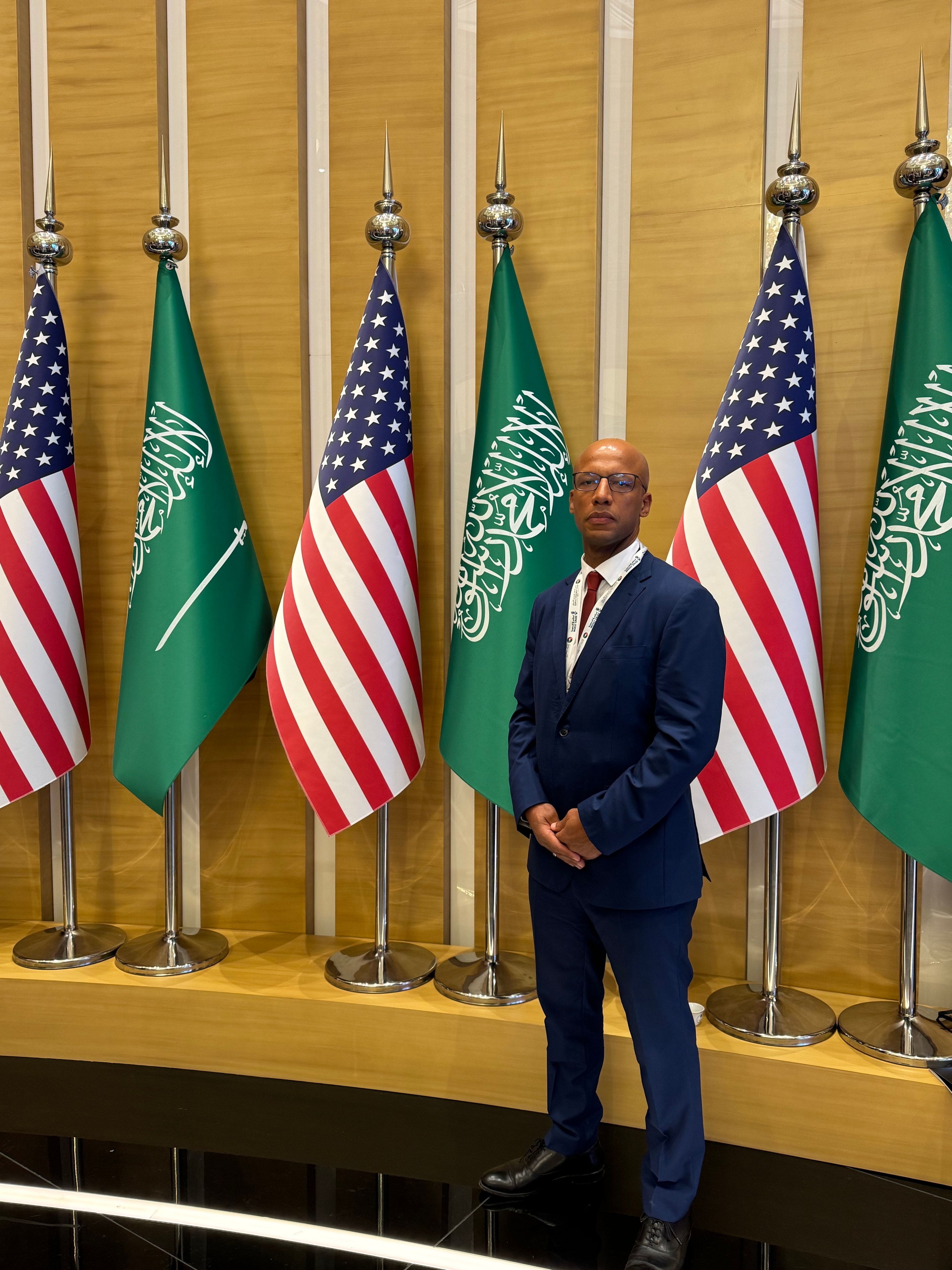
Professional Chronology
Five Chapters
Technology & Systems
1999–2002Organisations
Wunderman · The Barlow Group · Gennex
Capability
Business systems · Data management · Process analysis · Systems implementation · Tendering technology
My career began in business systems, data and process — working across data management, systems analysis, databases, manufacturing and tendering technology at Wunderman and The Barlow Group. The work was practical and implementation-focused: understanding how information moved through organisations and where process could be improved.
In 2002, I co-founded Gennex with Richard Giles — a colleague I had met at Sheffield Hallam University. Gennex developed an estimating and tendering system for the construction and manufacturing sectors. My role spanned business development, coordination of the development team and direct client implementation. It was an early and formative experience of building something from the ground up: defining the product, finding the clients, managing the delivery and learning what it takes to make a system work in practice.
Procurement Transformation
2002–2007Organisations
AstraZeneca · GE Money UK
Capability
Procurement transformation · e-Sourcing · e-RFx · e-Auctions · Oracle Purchasing · Buy-to-Pay · Process design
Procurement became the profession during this period — but technology remained central to how I approached it. At AstraZeneca and GE Money UK, I worked on purchasing transformation programmes that used digital tools to change how organisations sourced, contracted and managed spend.
The work included e-sourcing, e-RFx and e-auction programmes, Oracle purchasing and accounts-payable implementation, and Buy-to-Pay process design and deployment. These were not technology projects with procurement attached — they were procurement transformation programmes that used technology as the primary lever. The discipline of understanding a process before automating it, and of managing the human and organisational change alongside the system change, became a defining part of how I work.
Australia
2007–2014Organisations
GE Commercial Finance ANZ · Deloitte · Origin Energy
Capability
International sourcing · Category management · Facilities · Supply-chain leadership · Complex delivery · Procurement advisory
I moved to Australia in 2007 and hold Australian citizenship. The Australian chapter brought international procurement experience across financial services, professional services and energy — sectors with distinct commercial cultures, regulatory environments and supply-chain challenges.
At GE Commercial Finance ANZ, I worked across international sourcing and category management. At Deloitte, the work involved procurement advisory and complex delivery. At Origin Energy, I led procurement across facilities, categories and supply-chain functions, managing significant spend and developing the leadership and stakeholder capabilities that complex organisations require. Running alongside this professional career, I co-founded Essential Events Management in Sydney in 2008 — a parallel entrepreneurial strand that developed independently.
Middle East
2015–2021Organisations
Abu Dhabi — selected verified roles and projects
Capability
Procurement leadership · Healthcare & infrastructure · Mobilisation · Implementation · Handover · Transition to steady state · Multi-stakeholder delivery
The Middle East chapter brought a different order of complexity: major infrastructure and healthcare programmes, multi-stakeholder environments, mobilisation from first principles and the particular demands of operating in a region undergoing significant transformation.
Work in Abu Dhabi included procurement and supply-chain leadership across healthcare and infrastructure sectors, including involvement with Cleveland Clinic Abu Dhabi. The work covered mobilisation, implementation, handover and transition to steady-state operations — the full lifecycle of a major programme, not just the sourcing phase. Managing these transitions required commercial discipline, stakeholder alignment and the ability to operate effectively across cultures and organisational structures.
Saudi Arabia
2021→Organisations
Aidiation
Capability
Strategy · Transformation · Technology & AI · Lifecycle Value
Riyadh is where the strands converge. Aidiation — the procurement and supply-chain consultancy I founded — supports organisations across Saudi Arabia and the UAE with strategy, market engagement, mobilisation and long-term value optimisation.
The work brings together sector experience, commercial discipline, technology and specialist partnerships. Saudi Arabia's Vision 2030 programme is creating significant procurement and supply-chain demand across infrastructure, healthcare, energy, defence and public sector — and Aidiation is positioned to support organisations navigating that environment. Advanced research into AI and enterprise strategy runs alongside the consultancy work.
Case Studies
Selected Professional Work
Three case studies drawn from different phases of the career. Commercially sensitive details are anonymised where appropriate.
Case Study — Technology & Systems — Early Implementation
Building and Deploying an Estimating System: Gennex
Context
The construction and manufacturing sectors in the early 2000s relied heavily on manual estimating and tendering processes. Errors were common, turnaround was slow and the data generated by the process was rarely captured in a usable form.
Challenge
To design, build and deploy a software system that could handle the complexity of construction and manufacturing estimates — and to do so as a small founding team with limited resources, no established client base and no prior product.
Role
Co-founder. Responsible for business development, coordination of the development team and direct client implementation. Also involved in product definition and the commercial model.
Approach
We started with the process, not the technology. Before writing a line of code, we mapped how estimating actually worked in the sectors we were targeting — the inputs, the decision points, the outputs and the downstream uses. The system was designed around that process, not the other way around. Implementation was hands-on: we worked directly with clients to configure the system, train users and resolve issues in real time.
Result
A working product, deployed with clients in the construction and manufacturing sectors. The business generated revenue and provided a foundation for subsequent professional development in systems implementation and procurement technology.
Lessons Learned
Starting with the process before the technology produces better systems and faster adoption. Small teams move quickly when roles are clear and everyone is close to the client. The discipline of building something from nothing — defining it, selling it, delivering it and supporting it — is different from working within an established organisation, and the experience has informed how I approach implementation work ever since.
Case Study — Procurement Transformation — Technology-Led Change
e-Sourcing and Buy-to-Pay Transformation
Context
A large UK organisation with significant indirect and direct spend was operating procurement through fragmented, largely manual processes. Sourcing was inconsistent, spend visibility was limited and the accounts-payable function was generating significant overhead.
Challenge
To design and deploy an e-sourcing and Buy-to-Pay programme that would standardise procurement processes, improve spend visibility and reduce the cost and time associated with sourcing and payment cycles — while managing the organisational change required to make the new processes stick.
Role
Procurement transformation lead. Responsible for programme design, technology configuration, stakeholder engagement and implementation management.
Approach
The programme was structured in phases: process mapping and gap analysis first, then technology configuration, then piloting with selected categories before broader rollout. e-RFx and e-auction capability was introduced alongside Oracle purchasing and accounts-payable implementation. Stakeholder engagement was treated as a workstream in its own right — not an afterthought — because the technology would only deliver value if the people using it understood why the process had changed.
Result
Improved spend visibility, reduced sourcing cycle times and a more consistent procurement process across the organisation. The Buy-to-Pay implementation reduced manual intervention in the accounts-payable function and improved supplier payment performance.
Lessons Learned
Technology-led procurement transformation succeeds when the process design precedes the technology selection, and when the change management is treated with the same rigour as the technical implementation. Organisations that skip the process-mapping phase tend to automate their existing problems rather than solving them.
Case Study — Mobilisation & Transition — Major Programme
Healthcare Procurement Mobilisation and Transition to Steady State
Context
A major healthcare facility in the UAE was in the mobilisation phase — moving from construction and commissioning into operational readiness. The procurement and supply-chain function needed to be established, staffed, process-enabled and operational before the facility opened.
Challenge
To mobilise a procurement and supply-chain function from first principles within a defined programme timeline, then manage the transition from mobilisation into steady-state operations — while operating within a complex, multi-stakeholder environment with significant regulatory and clinical requirements.
Role
Procurement and supply-chain leadership. Responsible for function design, team mobilisation, process implementation, supplier engagement and the transition to steady-state operations.
Approach
Mobilisation was structured around three parallel workstreams: people (team structure, recruitment, onboarding), process (procurement frameworks, approval authorities, contract management) and systems (technology configuration, data migration, integration with clinical and financial systems). The transition to steady state was planned from the beginning of mobilisation — not treated as a separate phase — so that the function was designed to operate independently from day one of live operations.
Result
The procurement and supply-chain function was operational at facility opening. Supplier contracts were in place, the team was trained and the processes were embedded. The transition to steady state was managed without significant disruption to clinical operations.
Lessons Learned
Mobilisation programmes succeed when the end state is defined before the mobilisation begins. Building a function that is designed to be handed over — rather than one that depends on the mobilisation team to operate — requires deliberate design choices from the outset. In complex, multi-stakeholder environments, the quality of stakeholder alignment is often the binding constraint on programme pace.
Expertise
Areas of Expertise
Procurement Strategy and Transformation
Strategic definition, market engagement, lifecycle value and procurement transformation across complex organisations.
Supply-Chain and Commercial Leadership
Managing supply chains across sectors including infrastructure, construction, facilities management and healthcare.
AI, Digital Procurement and Transformation
From early e-sourcing and Buy-to-Pay implementation through to current research on how AI is reshaping procurement strategy and enterprise decision-making.
Strategic Sourcing and Category Management
Tendering, award, contract management and long-term value optimisation across multiple categories and sectors.
Mobilisation and Organisational Transition
Experience of mobilisation, transformation and operating in complex, multi-stakeholder environments across healthcare, infrastructure and energy.
International Markets
Operational experience across the UK, Australia, the UAE and Saudi Arabia — each with distinct commercial cultures, regulatory environments and supply-chain structures.
Qualifications
MSc · BSc (Hons) · MCIPS
Sheffield Hallam University · CIPS
Full professional history available on LinkedIn.
View LinkedIn ProfileCurrent Role
Connect
Business, Research and Partnership Enquiries
For business discussions, research conversations, media enquiries or strategic partnerships, please get in touch.